
Can Poland's Białowieża wetlands stop Russian troops and save the forest?
In Poland’s ancient Białowieża Forest, researchers suggest that its wetlands and dense woodlands may function as natural military defences against potential invasions, offering dual benefits for conservation.
Scientists studying Poland’s Białowieża Forest have proposed that its extensive wetlands and thick woodlands could serve as natural military defences against invading forces. The idea emerges amid heightened security concerns near the Belarus border, where the ancient forest straddles both countries. Researchers argue that these features might slow mechanized armies while simultaneously protecting the ecosystem from damaging infrastructure projects.
What happened
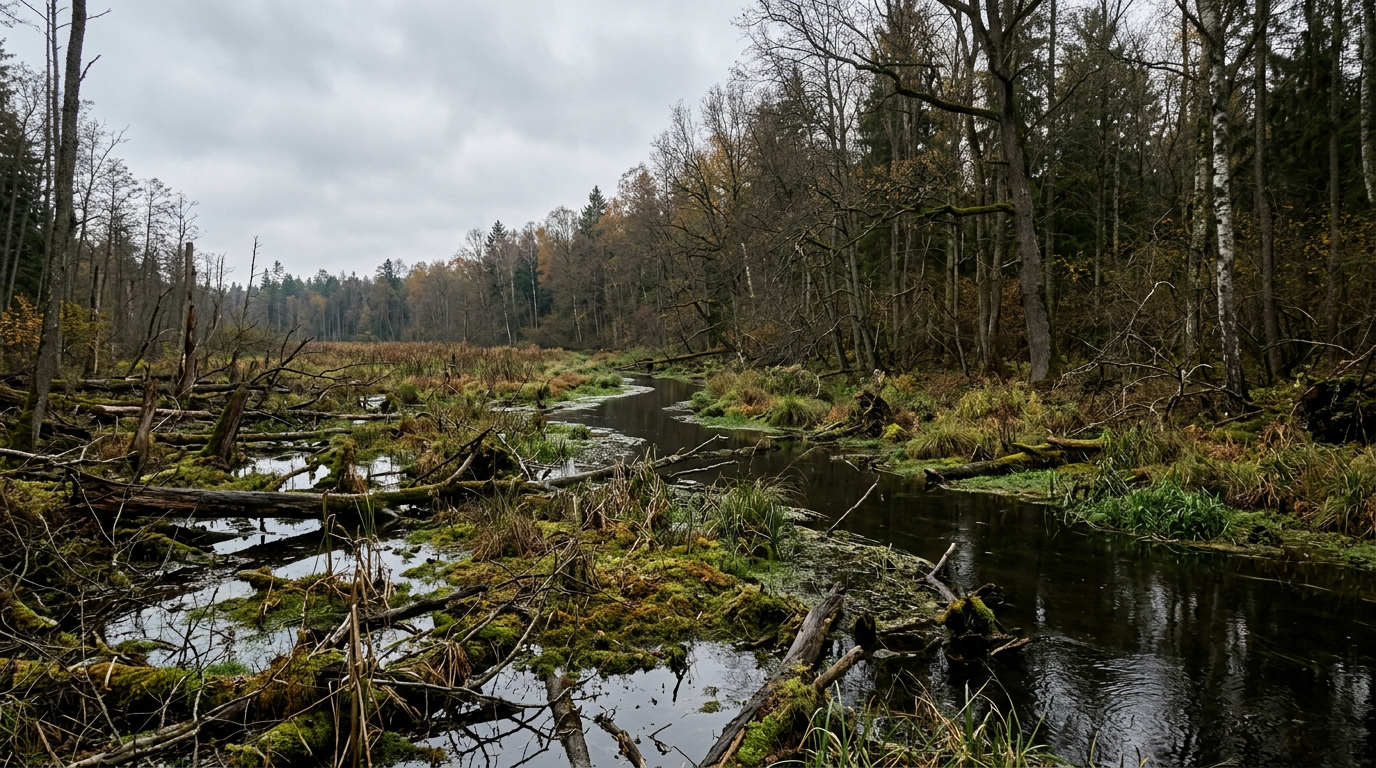
Field studies in the UNESCO-listed Białowieża Forest reveal how its waterlogged terrain and dense tree cover create significant obstacles for heavy military vehicles. Scientists observed that the combination of swamps, bogs and old-growth stands limits mobility far more effectively than many artificial barriers. At the same time, they warn that any attempt to fortify the area with roads, fences or cleared zones would accelerate habitat fragmentation in one of Europe’s last primeval forests.
The research highlights the forest’s unique position as both a biodiversity hotspot and a strategically sensitive border zone. European bison, wolves and countless rare insects depend on the undisturbed wetlands that also happen to act as natural deterrents. Polish authorities have already strengthened border security in the region, raising fears among conservationists that militarization could permanently harm the ecosystem.
Why it matters
Natural barriers versus man-made damage
Wetlands in Białowieża Forest wetlands military defence scenarios could reduce the need for destructive engineering works that often accompany border fortifications. Experts note that building new roads through peatlands releases stored carbon and fragments wildlife corridors essential for large mammals. Preserving the swampy character of the landscape might therefore achieve security goals with minimal ecological cost.
Lifeline for Europe’s last primeval forest
The same features that hinder tanks also maintain the forest’s hydrological balance, supporting its status as a remnant of post-glacial European woodland. Any large-scale military construction risks drying out peat bogs that have accumulated carbon for millennia. Conservation groups emphasize that protecting these wetlands serves both climate goals and defence strategy.
Cross-border cooperation challenges
Because the forest extends into Belarus, effective protection requires dialogue between neighbours at a time of geopolitical tension. Scientists hope the dual role of the wetlands as natural defence and ecological treasure might encourage policies that limit irreversible infrastructure on both sides of the border.
What comes next
Further modelling is expected to quantify exactly how much delay wetlands could impose on military movements under different weather conditions. Conservationists are calling for environmental impact assessments before any new border infrastructure is approved. Long-term monitoring of both biodiversity and security dynamics will determine whether the Białowieża Forest wetlands military defence concept can deliver lasting benefits for nature and national safety.
Policymakers face the challenge of balancing urgent defence needs with the legal protections afforded to this ancient ecosystem. If successful, the approach could offer a template for other ecologically valuable border regions facing similar pressures across Europe.
Sources
https://news.mongabay.com/short-article/2026/10/can-a-swamp-stop-an-army/
Amazon Rainforest Tipping Point: How Close to Collapse Despite Recent Gains?
Extractive industries threaten 30x30 nature goal in tropics, report finds
COP30 in Brazil: The Critical Climate Summit in the Heart of the Amazon
Frequently asked questions
How can wetlands in Białowieża Forest serve as military defence?
The waterlogged terrain and dense vegetation make it extremely difficult for heavy military vehicles to advance quickly, acting as a natural obstacle without additional construction.
Why is protecting Białowieża Forest wetlands important for conservation?
These wetlands maintain the hydrological balance of one of Europe’s last primeval forests, support rare species and store significant amounts of carbon.
What risks does militarization pose to the Białowieża ecosystem?
New roads, fences and cleared areas can fragment habitats, dry out peatlands and release stored carbon, causing long-term ecological damage.
See more Atmoswire in Google Top Stories
Open the link, sign in to Google and tick the box next to atmoswire.com.
Add Atmoswire as a preferred source on GoogleComments(0)
- No comments yet. Be the first!


